
Introduction
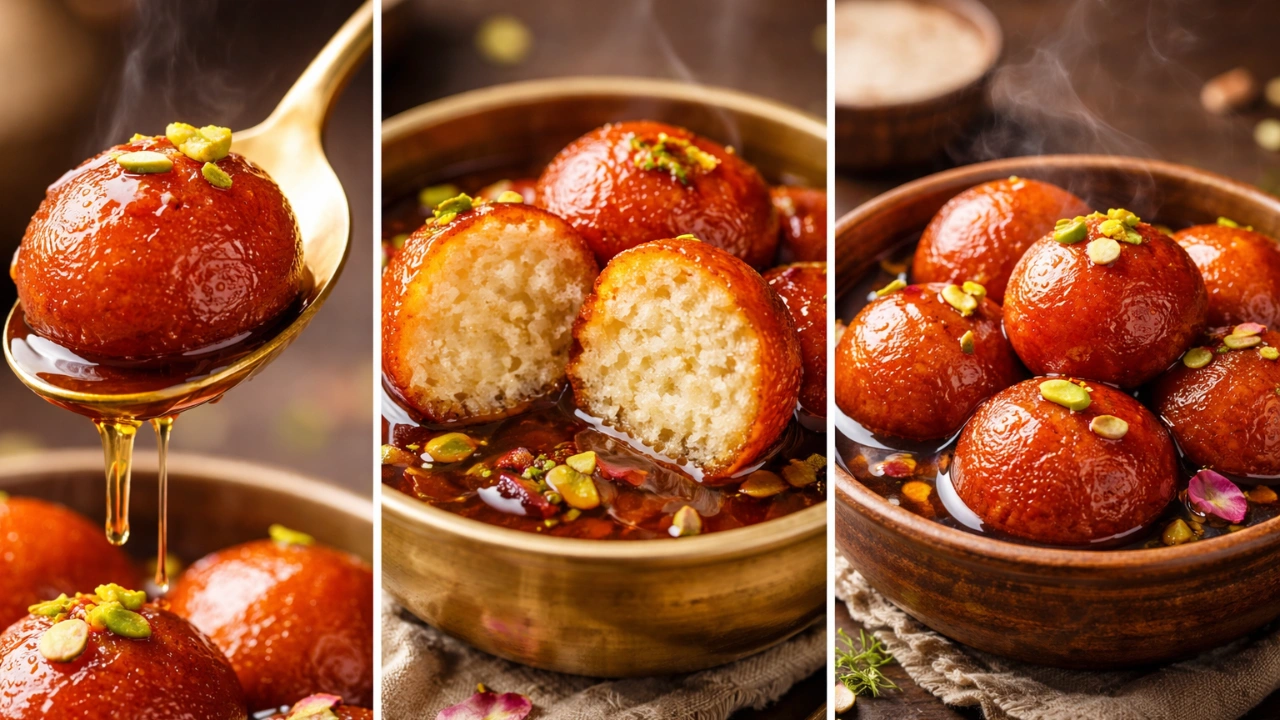
Soft, juicy, and soaked in fragrant sugar syrup, gulab jamun is frequently referred to as the “king of Indian desserts.” However, creating flawless Gulab Jamuns at home might be challenging. Are they hard to turn? While frying, crack? or a crack in the syrup?
Don’t worry—this infallible method will enable you consistently produce Gulab Jamuns that are as soft and delicious as those found in sweet shops. To ensure success, adhere to these easy procedures and expert advice!
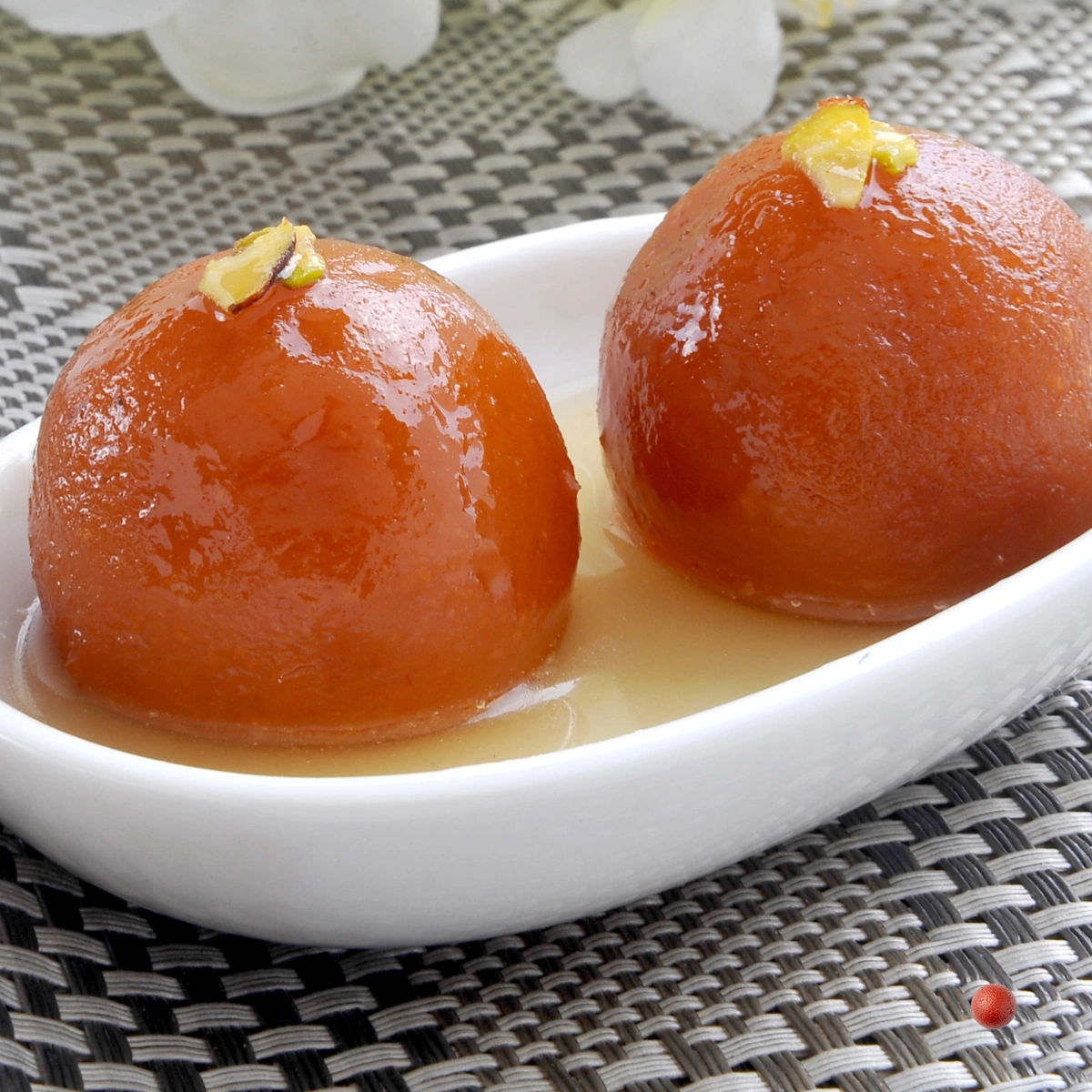

Perfect Soft Gulab Jamun (Milk Powder Method)
Ingredients
Method
- Prepare the Syrup: In a wide pan, mix sugar and water. Boil for 5–7 minutes until it becomes slightly sticky (no need for one-string consistency). Add cardamom and rose water. Keep it warm on low heat.
- Make the Dough: Sift milk powder, maida, and baking soda. Add ghee and cardamom powder. Gradually add milk, one tablespoon at a time, to bring the dough together.
- Crucial Tip: Do not knead like bread. Just combine gently until a soft, slightly sticky dough forms.
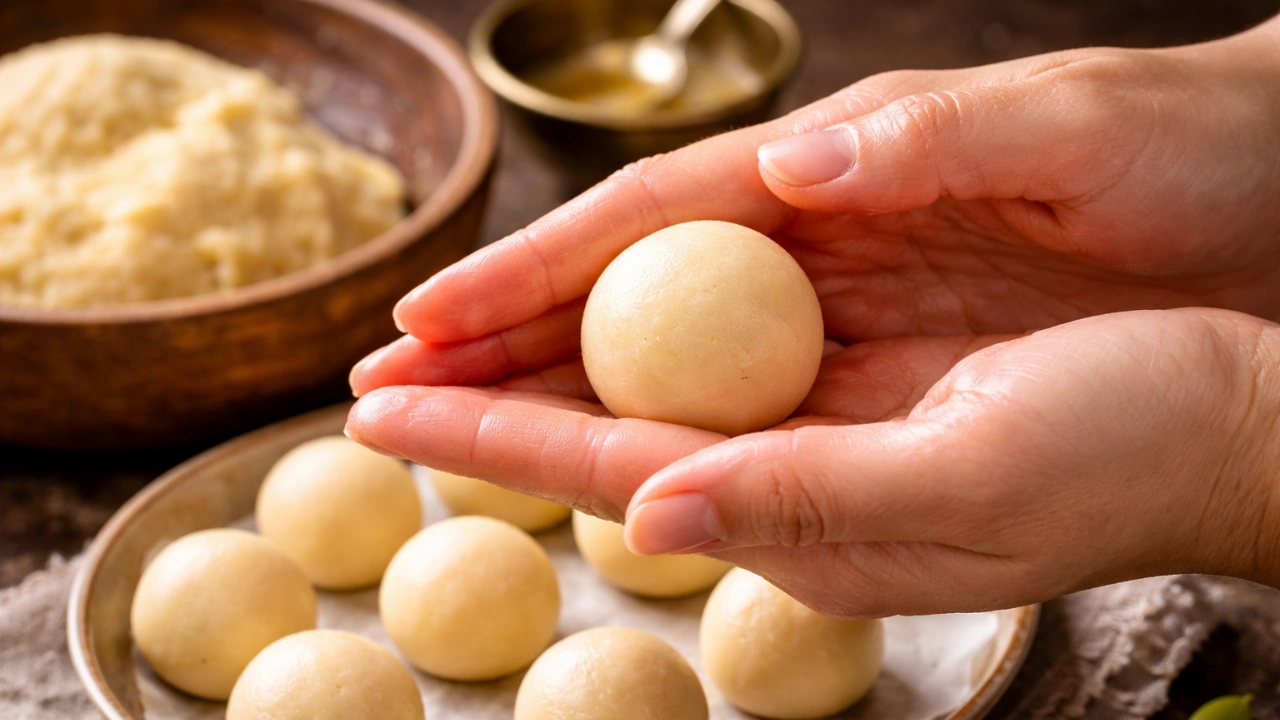
- Shape the Balls: Grease your palms with ghee. Take small portions and roll them into smooth, crack-free balls.
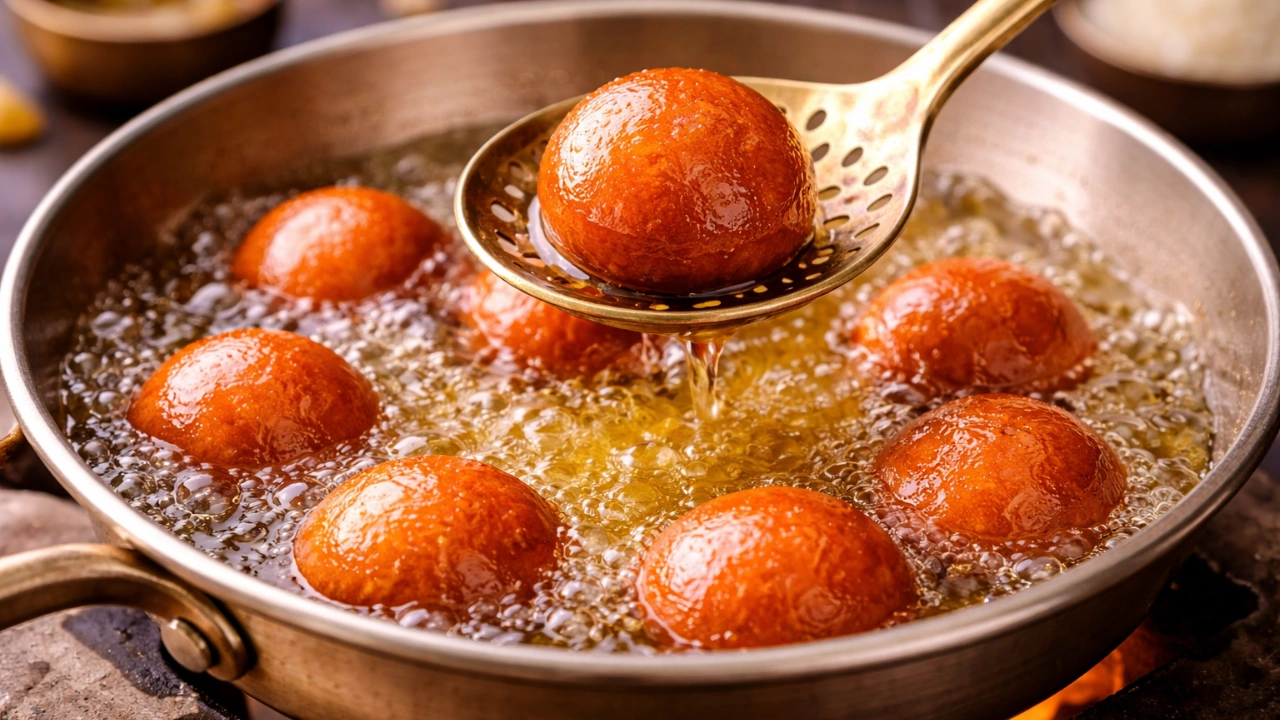
- Deep Fry: Heat oil/ghee on a low-medium flame. Test with a tiny piece of dough—it should rise slowly. Fry the balls until they are deep golden brown, stirring constantly for even coloring.
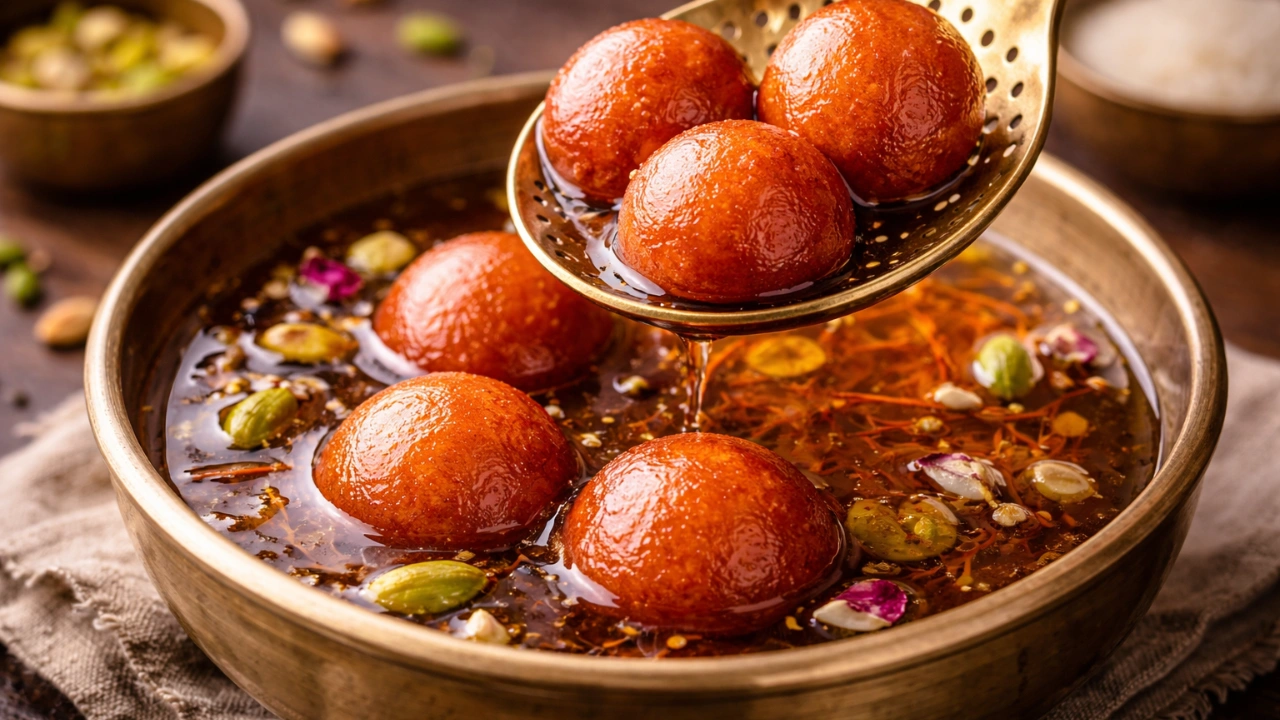
- Soak: Remove the fried jamuns and drain excess oil. Immediately drop them into the warm sugar syrup.
- Resting: Let them soak for at least 2 hours. They will double in size and become juicy.
Notes
Pro-Tips for Perfect Jamuns
- The Dough: Do not knead like bread. Just gently bring the ingredients together. Over-kneading makes jamuns rubbery.
- No Cracks: If the dough feels dry and cracks appear while rolling, add 1 tsp of milk and roll again until smooth.
- Oil Temp: Fry on low-medium heat only. The jamuns should slowly rise to the top. High heat leaves the center raw and hard.
- The Syrup: Ensure the syrup is warm, not boiling, when adding the fried jamuns. This prevents the skin from peeling.
- Resting: Let them soak for at least 2 hours to double in size and become fully juicy.
Ingredients
For Gulab Jamun Dough
- Milk powder (or khoya) – 1 cup
- all-purpose flour (maida) – 2 tbsp
- ghee – 1 tbsp
- baking soda – ½ tsp
- milk (for kneading) – 2 to 4 tbsp
For Sugar Syrup (Chashni)
- sugar – 1½ cups
- water – 1½ cups
- cardamom pods (crushed) – 3 – 4
- saffron strands (optional) – Few
- rose water (optional) – 1 tsp
Step-by-Step Instructions
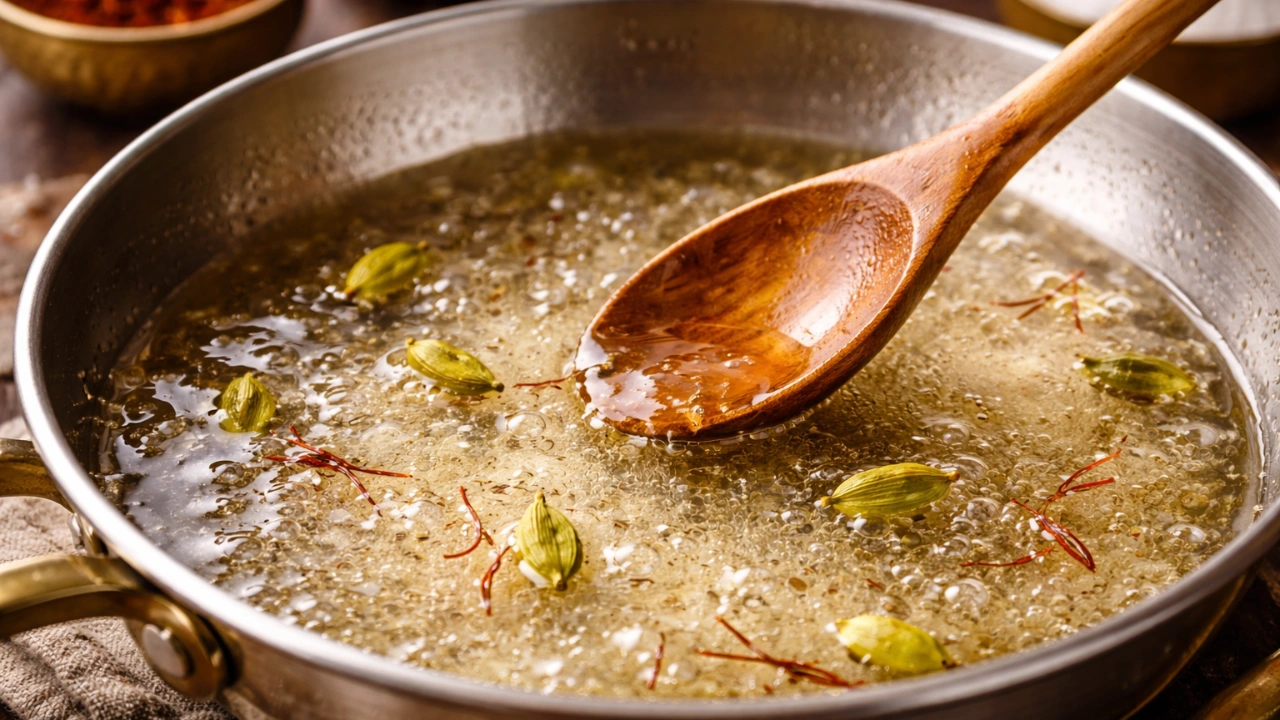
Step 1: Prepare the Sugar Syrup
Put water and sugar in a pan. Heat until all of the sugar has been dissolved. Add saffron and cardamom.
The syrup should have a somewhat sticky consistency—it doesn’t need to be thick. Don’t boil it; just keep it warm.
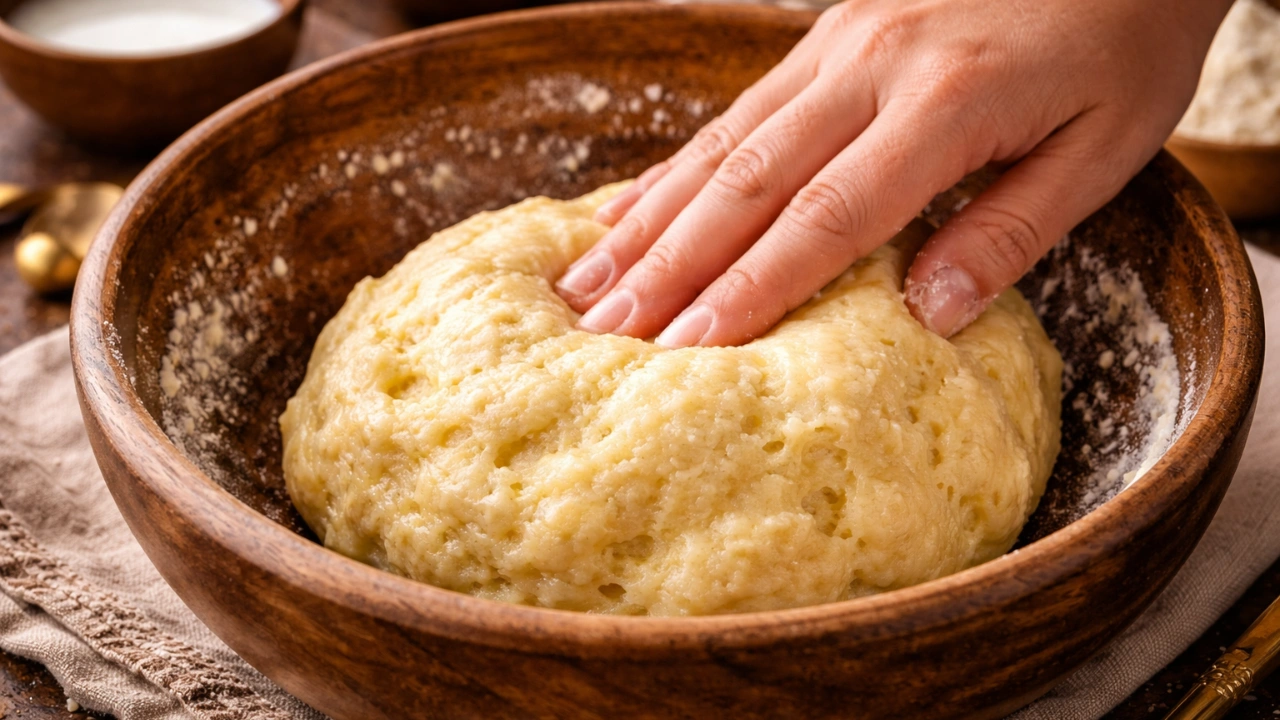
Step 2: Make the Dough
Combine the ghee, baking soda, maida, and milk powder in a bowl.
Gently combine it into a soft dough by gradually adding the milk.
Crucial: Avoid overkneading. The dough should have a slight stickiness and be soft.
Step 3: Shape the Jamuns
Use a small amount of ghee to grease your palms.
Create tiny, flawless balls that are free of fractures.
Perfectly soft Gulab Jamuns with crack-free balls!
Step 4: Frying Strategy
Heat ghee or oil over a low to medium heat source.
Gently drop the balls and cook slowly, swirling constantly.
They should be uniformly golden brown. A high flame will quickly cook the outside while keeping the inside raw.
Step 5: Soaking
Take out the fried jamuns and put them in the warm syrup right away.
Give them a minimum of two to three hours to soak. For a rich, delicate texture, this step is essential!
Pro Tips for Soft Gulab Jamuns (Golden Tips)
Oil Temperature Matters: The temperature of oil is important; it should be warm but not overheated.
Syrup Temperature: Jamuns should always be added to warm, not boiling, syrup.
Avoid Over-Kneading: Jamuns become difficult if the dough is overworked.
Rest the Dough: Before shaping, let it sit for five to ten minutes.
Consistent Size: Guarantees uniform cooking
Common Mistakes to Avoid
Jamuns break when too much baking soda is added.
Frying over a hot flame → Burned outside, hard within
Creating dry dough → Causes fractures
Thick syrup → improper absorption of jamuns
Storage Tips
- Keep in the fridge for up to three to four days in an airtight container.
- For optimal flavor, reheat gently before serving.
- For extended preservation, you can also freeze them without syrup.
Frequently Asked Questions (FAQ)
Q1: Why did my Gulab Jamun break or crack while frying?
A: This is the most common issue! Usually, it happens because:
-
Too much leavening agent: Adding too much baking soda makes the balls expand too fast and break.
-
Dry Dough: If the dough is too dry, cracks will form.
-
The Fix: Add a teaspoon of milk to the dough to make it smooth and moisture-rich. Ensure there are no visible lines when rolling the balls.
Q2: Why is my Gulab Jamun hard in the center?
A: If the outside is cooked but the inside is a hard lump, check these:
-
High Flame: Frying on high heat cooks the outside too fast, leaving the inside raw and dense.
-
Over-kneading: Kneading the dough like bread makes it tough.
-
The Fix: Always fry on low-medium heat. The jamuns should slowly rise to the top. Handle the dough gently—just bring it together, don’t mash it!
Q3: How do I make the syrup penetrate deep inside?
A: For that juicy, melt-in-the-mouth texture:
-
Cold Syrup: If the syrup is cold, the jamun won’t absorb it.
-
Boiling Syrup: If it’s boiling, the jamun might become too mushy and disintegrate.
-
The Fix: The syrup should be warm (touchable) when you add the fried jamuns. Let them soak for at least 2 hours before serving.
Q4: Can I use Instant Mix with this method?
A: Yes! While this recipe uses milk powder/khoya, the frying and soaking techniques remain exactly the same for instant mixes like MTR or Gits to get better results than the package instructions.
Q5: Why did my Gulab Jamuns shrink after putting them in syrup?
A: This usually happens if the sugar syrup is too thin or if the jamuns weren’t fried long enough.
-
The Fix: Ensure the syrup has a sticky, half-string consistency. If it’s too watery, the jamuns will lose their structure and shrink.
Conclusion
You now know how to make Gulab Jamuns at home that are perfectly soft and spongy!
Have you tried this recipe? ⭐ Give it a rating below, then share your findings!
Remember to check out our site for more delectable North Indian dessert recipes, and don’t forget to tag us on Instagram.