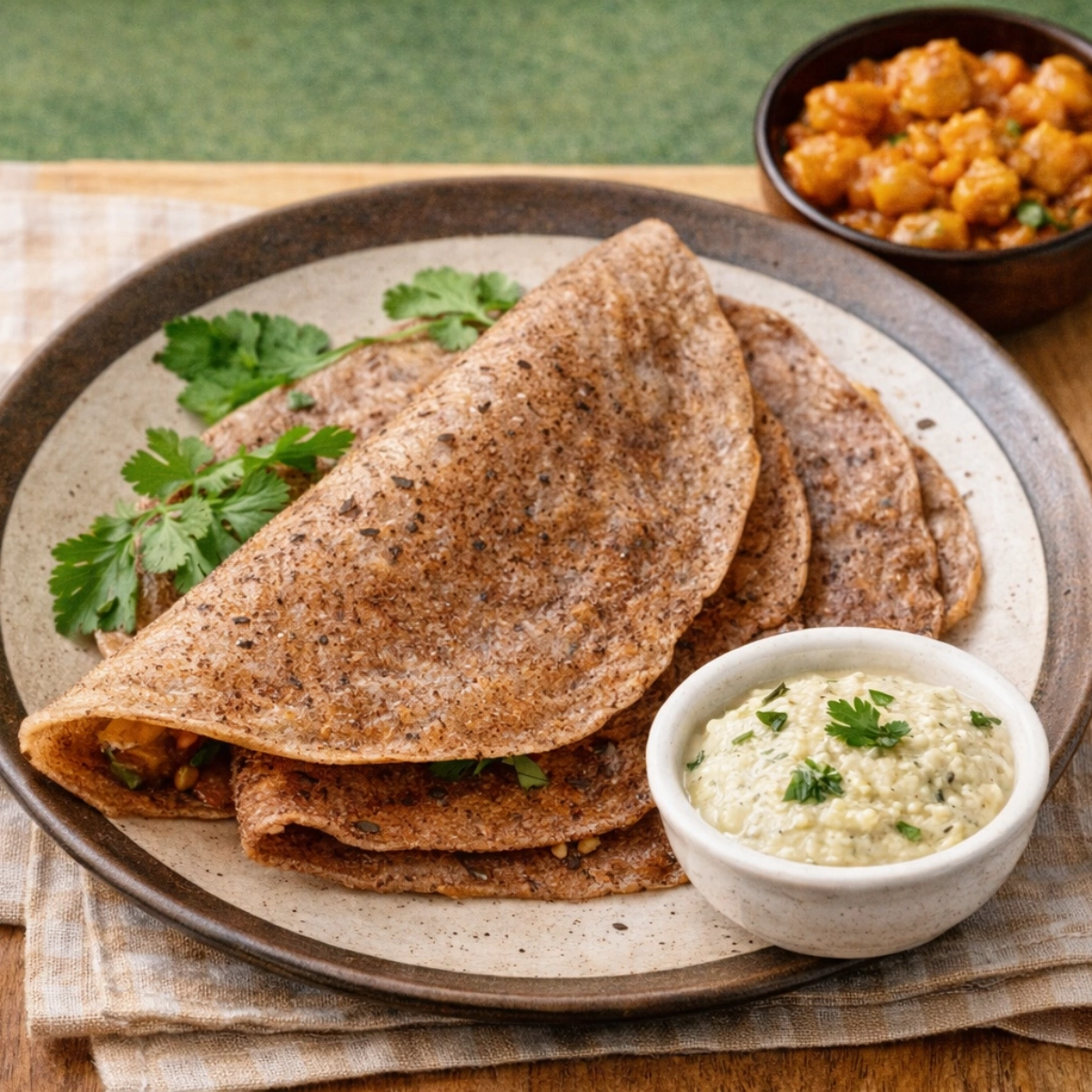

Ingredients
Method
- Batter Mix: In a bowl, whisk Ragi flour, rice flour, and curd with water until you get a very thin, watery consistency (thinner than regular dosa batter).
- Add Veggies: Fold in the grated carrots, onions, chilies, ginger, and salt. Let the batter rest for 5 minutes.
- Heat the Tawa: Use a non-stick pan and get it very hot.
- Pour (Don't Spread): Do not spread like a normal dosa. Pour the thin batter from the edges toward the center. It should form small holes (lace-like texture).
- Cook: Drizzle a few drops of oil. Cook on medium-high heat until the edges turn brown and crispy.
- Serve: Flip if needed, then serve hot with peanut chutney or spicy garlic tomato chutney.
Notes
Pro Tips
- The Batter Consistency: The secret to a crispy Ragi Dosa is a watery batter. It should be much thinner than your regular Idli/Dosa batter—almost like the consistency of milk or buttermilk.
- The "No-Spread" Technique: Unlike regular dosa, do not use a ladle to spread this batter in circles. Instead, splash or pour the batter from a height starting from the edges of the pan and moving toward the center. Fill the large gaps, but leave the tiny holes; they make the dosa crispy.
- Resting Time: Always let the batter rest for at least 5–10 minutes. Ragi flour absorbs water over time, and this prevents the dosa from breaking when you flip it.
- Temperature Control: Ensure the Tawa (pan) is piping hot before you pour the first ladle. If the pan isn't hot enough, the dosa will become soft and sticky instead of crispy.
- For Weight Loss: Use a non-stick pan or a well-seasoned cast-iron skillet so you can cook with minimal oil (or just a light oil spray).
- Flavor Variation: You can add a pinch of Hing (Asafoetida) or some finely chopped Curry Leaves to the batter for a more traditional South-meets-North Indian flavor profile.
- Storage: This batter is best used fresh. If you store it in the fridge, the Ragi may settle at the bottom, so give it a very good stir and add a little extra water before making the next batch.